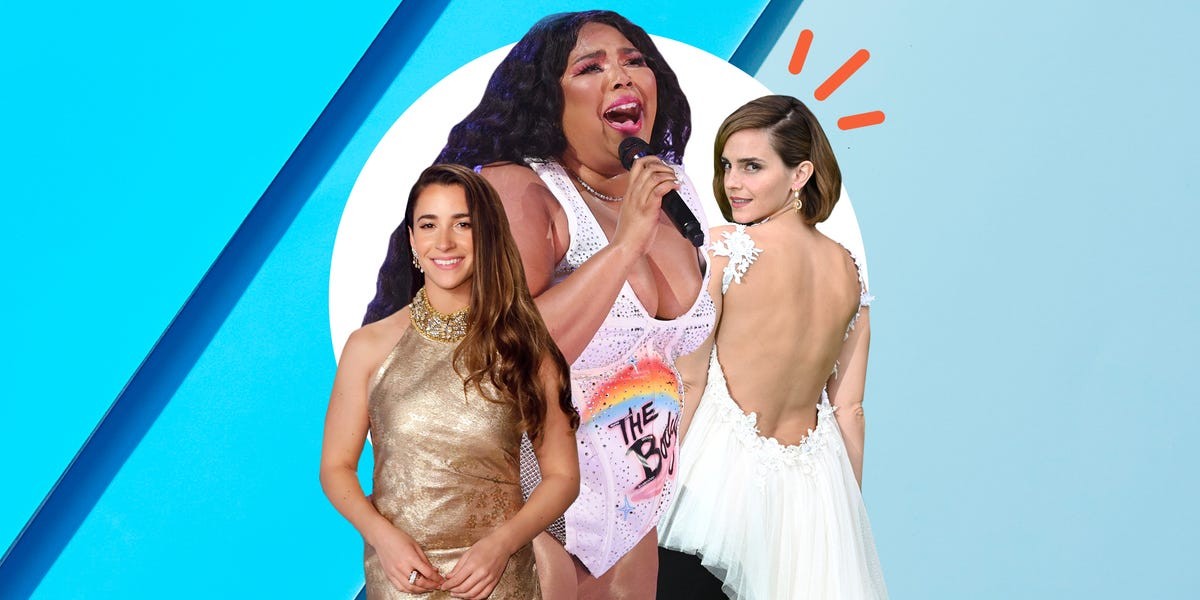
In an era dominated by highly curated social media feeds and relentless digital scrutiny, women face an unprecedented barrage of “ideal” body standards. For female celebrities and elite athletes, this pressure is magnified; their physical forms are not just personal attributes but are frequently treated as public property for debate.
The Reality of Public Scrutiny
The criticism directed at high-profile women often transcends simple observation, frequently crossing into targeted body-shaming. This phenomenon is not merely about “trolls” on social media; it can even manifest in official capacities.
Consider these notable instances of public scrutiny:
– Aly Raisman: The Olympic gymnast faced criticism from a TSA agent regarding the muscularity of her arms, highlighting how even physical strength can be met with judgment rather than respect.
– Serena Williams: The tennis legend has faced derogatory comments regarding her physique, with critics using gendered language to dismiss her powerful, athletic build.
These examples illustrate a broader trend: when women possess strength or non-traditional silhouettes, their bodies are often framed through a lens of criticism rather than celebrated for their capability.
Turning Criticism into Empowerment
Despite the persistent noise of negativity, many of these women have refused to be silenced. Instead of retreating, they have leveraged their global platforms to challenge the status quo.
Rather than adhering to a singular standard of beauty, these icons are reshaping the conversation through:
– Unfiltered Authenticity: Sharing candid, unedited photos that reflect real human bodies.
– Vulnerable Self-Reflection: Speaking openly about their own struggles with body image.
– Advocacy: Using their influence to promote the idea that beauty is diverse and multifaceted.
By doing so, they are moving the needle from a culture of comparison to one of acceptance. They demonstrate that physical strength and “ideal” aesthetics are not mutually exclusive, but can exist side-by-side.
The Bigger Picture
The struggle against body shaming is a universal one. While the scale of criticism faced by celebrities is extreme, the underlying sentiment—the quiet worry over tone, texture, or shape—is something most people experience. The shift led by these athletes and stars suggests that the most effective way to combat negative self-talk is to replace it with a broader, more inclusive definition of what a body can achieve.
True strength lies in reclaiming the narrative of one’s own body, proving that capability and confidence are