That red plaid cotton apron hanging from the back of the kitchen chair? It disappears. Let’s shrug our shoulders quietly, not loudly. Professional chefs, reality TV contestants and serious home cooks are ditching the standard cotton model. They didn’t do this for aesthetic rebellion. They looked for two different options that would solve the real problem: a Japanese maekake and a linen apron with a crossed back. These are more than just buzzwords. They are feature updates.
A classic cotton apron doesn’t have to go wrong just because it looks dated. I failed because it didn’t work.
Why cotton is not healthy and protective
Fat is your enemy. Olive oil, butter, cooking oil, etc. are not only on the surface of light cotton. Penetrates deep into the fibers. Over time, these fats oxidize. A thin cotton apron bought at a big store absorbs the drops, but does not protect. The hot liquid firmly reaches the skin. The clothes below are still torn.
It’s worse. According to a study published in the Journal of Applied Microbiology, kitchen fabrics such as aprons and dishtowels are underappreciated vectors of cross-contamination. Bacteria can survive on a wet cloth at room temperature for several hours. A standard cotton apron can become a biohazard if worn for two to three days without being properly washed. Cotton with fatty sauce may contain bacteria. Retains odors that penetrate the fibers.
There are also ergonomic pitfalls that most people don’t notice. The classic neck strap goes deep into the neck. It can cause pain in the cervical spine. Try standing on a cutting board for two hours under that kind of pressure. This is unsustainable.
Maekake: 500 years of functional design
The word “maekake” literally means “to hang in front”. This is an iconic Japanese garment that dates back to the 15th century. Short Apron tightly tied at the waist. It can be protected. It supports your lower back. It frees up freedom of movement. The name comes from the words “mae” and “kake”. Simple. Effective. Unisex.
It has been used by brewers, merchants, artisans and workers since the Muromachi period. They have survived centuries of industrial changes without losing their functional style. Rice farmers, sake brewers, soy sauce makers, miso makers and others use it in their store logos. This is not a one-size-fits-all protection. It is the identity of a professional.
Today, Japanese maekake apron has gained a new readership. Cooks. Flower shop. Fruit and vegetable seller. Japanese bartender. You’re not looking for loose, baggy fabric that can catch on the machine. The fabric apron is woven to fit the body. It doesn’t limit anything, it just minimizes the risk.
It is tied around the waist. Keep your clothes clean. But the real benefits are hidden. When the pelvis is tightened, it acts as a weight belt for the lower back. Think about this the next time you’re cooking an hour-long dinner.
Manufacturing without compromises
Look at the first-class genuine pine base. You can see the fringe instead of the hem. This is not a manufacturing shortcut. This is a tradition born of scarcity. At a time when cotton was rare and valuable, the fabric was cut without hemming from spare materials. A tribute to textiles.
Maekake Anything, founded by Kazuhiro Nishimura in Toyohashi (Aichi Prefecture), continues this approach. We use nine shuttle looms that are more than 100 years old. centenarian apron-making machines are sold all over the world. This is an anachronistic approach.
Ergonomic option: linen and cross-backs
If you don’t like the style of tying the apron at the waist, there is another option that will please the most discerning cook. It is a linen apron with criss-cross straps.
Why linen? It is breathable, durable and naturally antibacterial. It doesn’t leave behind an oily smell like cotton. It softens with every wash. But the real game changer is the strap design.
Cross straps distribute the weight between the shoulders. No strain on the neck. Don’t hit your trapezius muscles. Even support. For chefs who move quickly, lean forward and reach overhead, this is not a luxury. This is a must have.
The classic single-knot cotton apron is a relic of an era when kitchens were less demanding and hygiene standards were lower. we’re over it. It’s not a question of Do you need an apron. This is someone who respects your body, hygiene and technique.
Maekake offers traditional weights and lower back support. Linen is breathable and reduces shoulder strain. cotton? It just holds onto the mess.
Which one is better? It depends on how you prepare it. But one thing is clear: the time of wearing oil-absorbing, neck-straining cotton apron is over.
Crossback linen apron: Why professionals choose it
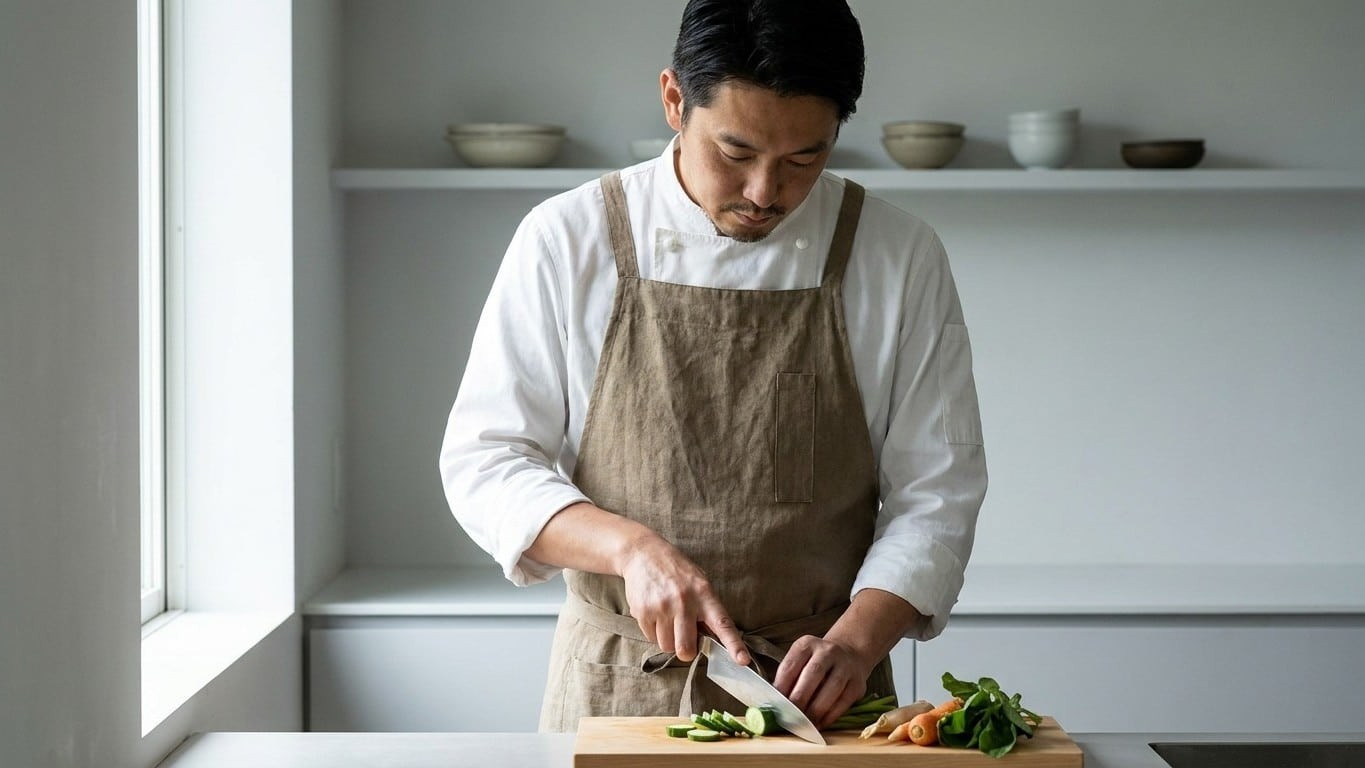
Forget the usual cotton bibs. A real contender and a favorite of those who walk for hours is the linen apron with a crossed back. In some markets it may be called the “Japanese Crossback Apron”, but this model has long since outgrown its geographic label. The feature is simple, the straps are crossed. Put it on in just one go and fasten it around the neck and waist to ensure the fabric stays in place. Whether you’re preparing dinner or gardening, this style combines raw functionality with a minimalist aesthetic unmatched in mass-produced gear.
The choice of linen was not arbitrary. It is the cornerstone of that specific, understated aesthetic, but remains for performance. Linen has natural heat-regulating properties. It wicks away moisture and dries faster than cotton. It also has anti-bacterial properties in itself, making it more attractive with every wash. Cotton, by contrast, tends to retain heat and moisture. After an hour of chopping and sautéing, the cotton feels heavy and damp. Linen breathes. It feels cool. It’s like the difference between wearing a t-shirt in the sauna and wearing a t-shirt in the shade.
Waterproof linen for messy work
Not all linens are created equal. standard woven linen get saturated quickly with boiling oil, acidic tomato sauce or soup spills. This is where coated and waterproof versions come into play. These are not synthetic materials that look like plastic. They are natural fibers that has been treated to wick away liquid while maintaining breathability.
“Coated linen combines the temperature-regulating properties of natural fibers with active resistance to hot splashes that regular cotton can never offer.”
This development has made the crossback design more suitable for serious cooking. The fabric repels the splash before it stains, but it doesn’t retain body heat like a rubber jacket. This is a practical upgrade for anyone who sees cooking as more than just a weekend hobby.
Why fit is more important than fabric
The Japanese cross-back style solves a mechanical problem that most people ignore until they experience neck pain. Standard apron straps go directly over the shoulders. those straps dig in when you move your hand to lift the pot or reach into the oven. Crossback design distributes tension to the upper back. Eliminates pressure points in the cervical spine. You can move freely. You can lift. You can work for hours without a constant tug of war between your body and your clothes.
That’s why chefs, florists, potters and serious home cooks prefer it. This is not an Instagram prop. It is a tool designed for motion. The fabric, whether it’s thick cotton fabric or linen, will block the droplets without suffocating. The result is a protective layer that is not uniform, but more like a second skin.
Think of it as art
When it’s done, most people just shove their apron into a drawer. It’s a waste of aesthetic potential. The maekake, as these traditional Japanese work aprons are designed for presentation purposes. Hang it on the wall. Make it a textural element in your kitchen or studio. Add quiet, disciplined elegance to the space. A checked cotton apron is just a rag when you take it off. A well-constructed linen cloth apron is an interesting object. This shows that you value your craft, even if you don’t actively practice it.
Long term math
Reality check on expenses. Linen is one of the most durable natural fibers. It resists deformation. Even after dozens of machine washes, it is does not pill or fray easily. In fact, it softens over time and becomes more comfortable without losing its structural integrity. Cotton aprons, especially thin ones, stretch, lose their shape and fade after a year of heavy use.
When you factor in the cost of wear and tear, a quality linen apron is usually cheaper than replacing a cotton apron every six months. Professional kitchens have known this for decades. They buy once, they wear it until it is threadbare, respecting the fabric that serves them well. For the modern home cook, it’s an investment in comfort and durability, reducing laundry and fewer replacements.
It’s not a question of which fabric looks better on the hanger. It’s about how you want to feel when you work. Stiff and hot, or cool and free? The answer usually becomes clear after the first wash. Then the Apron is even better.