


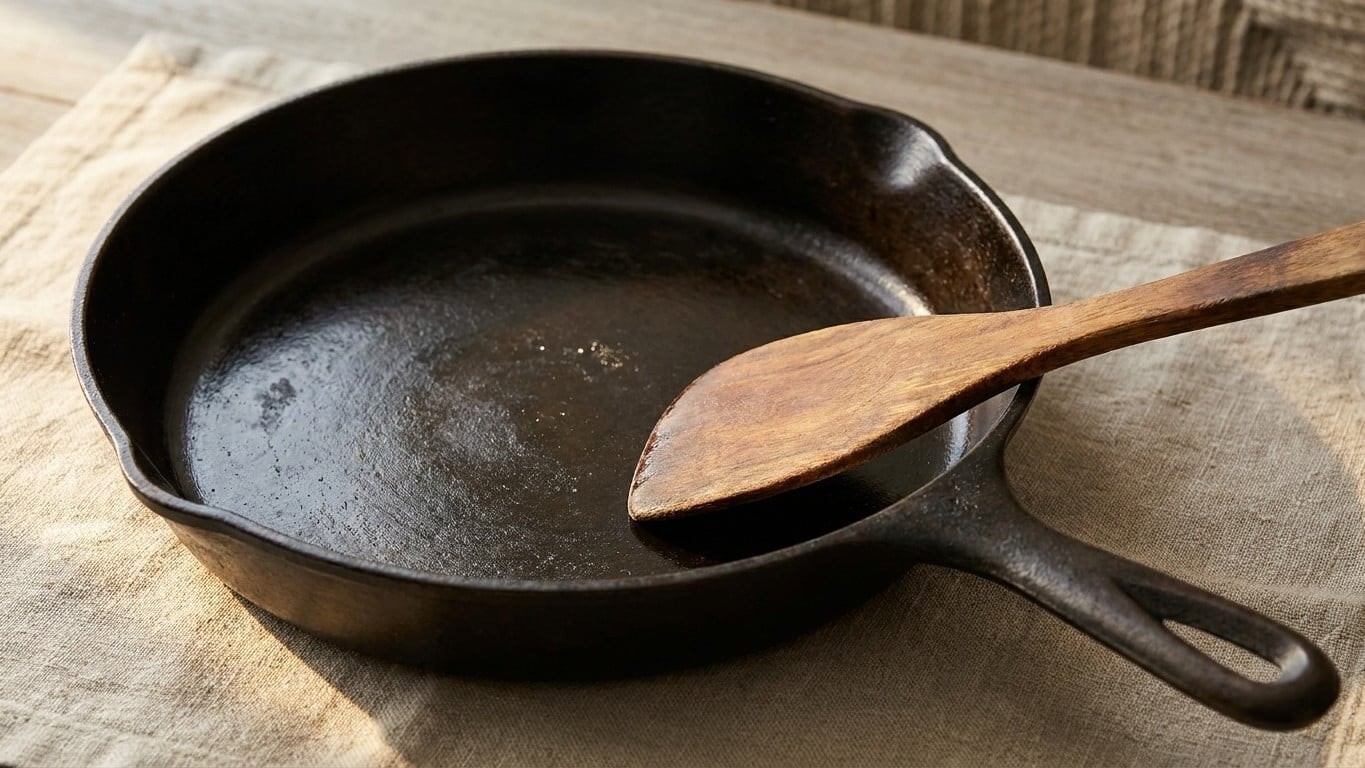
The pan was black. Smooth. Almost oily to the touch. There are no scratches. No synthetic coatings. It’s just black metal that my grandmother used to wipe off with a cloth every time she used it. Then one day, as I would with any other frying pan, I put some dish soap in it and run it under the tap. Everything stopped. Eggs stuck. Definitively.
This is not a kitchen mystery. It is basic chemistry that we simply forgot to pass down.
What is the invisible black film you destroyed?
Seasoning is the process of applying fat to cast iron and frying it. When the fat reaches its smoke point, polymerization occurs. The fat bonds with the iron alloy. This polymer layer forms a non-stick surface. Your grandmother didn’t avoid soap because she was being difficult. He protects an invisible chemical layer that took decades to form.
This layer is maintained through regular use. The fat used in the cooking process is added to the seasoning, creating a natural non-stick coating that improves over time. Your heirloom shiny black pot probably represents years of cooking. intangible capital. You dissolved it in thirty seconds.
The dishwashing liquid is specially designed to remove oil stains. It does its job too well. We strongly advise against using degreasers, even “natural” degreasers. If you use detergent, the effort you put into seasoning will be wasted. This has nothing to do with dosage or mildness. It is the detergent that causes this problem. Carefully attack the parts of the cast iron that should be preserved.
The salt method, passed down from those who knew
The good news is a damaged cast iron pan is never lost. After use, let the device cool down a little, but not completely. Residual heat helps food residues release. Rinse with lukewarm water while scrubbing with a stiff brush or non-metallic detergent.
For resistant residues, here is the reflex to adopt: Coarse salt acts as a mild abrasive. Add a spoonful of salt to a warm pot and rub with an oiled paper towel to remove stains easily. The salt acts as an abrasive, but be careful not to burn yourself. When you feel that the salt no longer meets resistance in the pan, it means that all the residue has been removed. No chemistry. No detergent. Just mineral against mineral.
After this treatment, rinse thoroughly and dry quickly. The drying step is critical because it prevents corrosion. The best technique is to heat the pan on low heat after cleaning to evaporate the moisture. This path to the fire, forgotten by many, is the difference between good cast iron and one that rusts in two days.
Spice restoration: a long but simple process
If the pan is damaged and the pot is stuck in one of the cooks, you have to start over. After the rust is removed, prepare the sauce from scratch, apply a thin layer of oil, wipe off the excess oil, and bake at 200℃ for 1 hour. Repeat this process 3-4 times to create a solid foundation.
The choice of oil is important. Cast iron can be seasoned with any oil, but Lodge recommends vegetable oil, which is readily available, inexpensive, and highly effective. Canola oil is one of the most suitable oils. Linseed oil completely polymerizes and forms a durable layer. What to avoid: Virgin oils with low smoke points are at risk of spoiling before they polymerize properly.
This natural layer improves with use. The more you fry in a properly maintained pan, the thicker and more effective the patina will be. After about 30 cooking times, you will have a perfectly seasoned hot pot. There are 30 cooks. 2-3 months in normal use. This is the price I pay to restore what my grandmother patiently built.
Do not put the frying pan in the dishwasher. I’m serious. Never.
The combination of high temperatures, strong detergent tablets and long, vigorous wash cycles can remove old layers in one wash. This is not a cleanup error. This is destruction. Do not soak the pot. Do not push it through the machine. Hand wash in hot water. Here are some important points that most people overlook: Running a hot pot under cold water can cause the metal to crack due to thermal shock. Cast iron does not like sudden changes in temperature. It also hates chemical shocks.
The real enemy is not a random drop of soap. It’s residual moisture.
A frying pan that has been dried, rinsed and heated for 30 seconds on the stove will last longer than a frying pan that has been thoroughly washed and kept moist. Storage is just as important as cleaning. A dry and well-ventilated environment is necessary to prevent rust. Avoid using closed cabinets that trap moisture. Hang it on a hook on the wall or place it on an open shelf.
There is one more thing to consider. Cast iron is built to last. In some households, pans are passed down without ever breaking the seasoning cycle. pans are still used every day in kitchens throughout the American South. Your pan is not condemned if it looks worn. It’s just waiting for you to rebuild its protective cover. Layer by layer. Meal by meal. With the same patience your grandmother used.
Sources : homehardware.ca | cafeartcurial.fr

