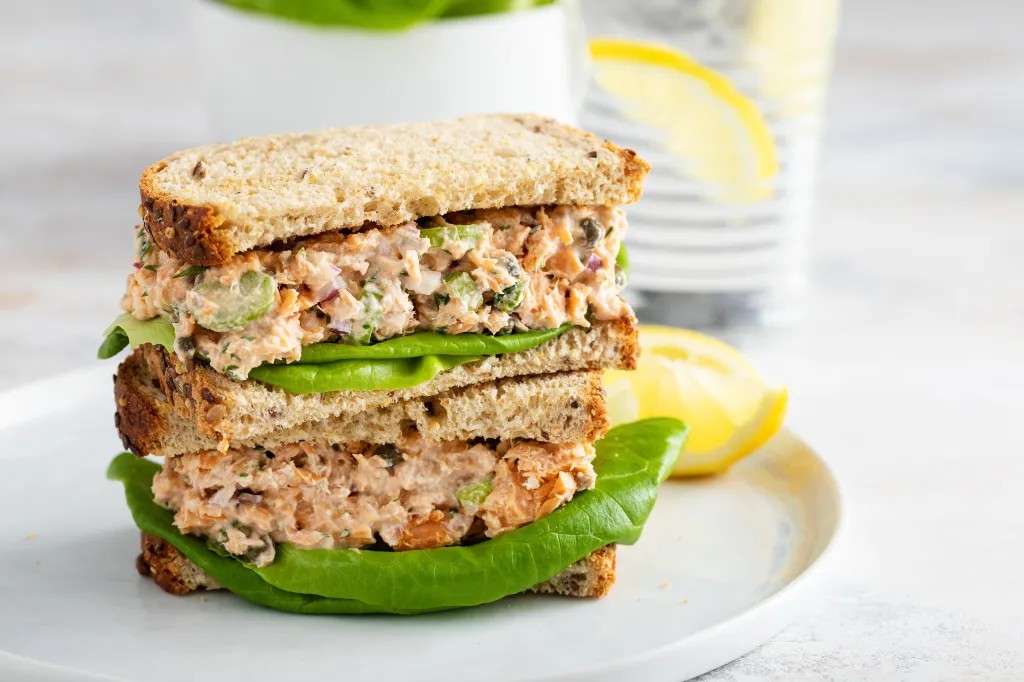
Most people agree on one culinary truth: the tuna salad served behind a deli counter is superior to anything prepared at home. It arrives scooped into a plastic container, priced by the pound, and possesses a texture that is simultaneously creamy, cohesive, and moist without being wet. While home cooks often pack this sandwich into lunchboxes with quiet resignation, accepting that their version falls short, the gap in quality is not due to secret ingredients or premium brands.
The difference lies entirely in mechanical preparation.
The Texture Gap
The hallmark of professional deli tuna salad is its consistency. It holds together on bread without crumbling, yet it isn’t chunky or dry. This specific texture—the “whipped” quality that survives the squeeze of a sandwich—is nearly impossible to achieve by stirring with a fork.
When mixing tuna salad by hand, the ingredients remain distinct entities: flakes of fish suspended in pools of mayonnaise. This leads to a disjointed eating experience where the filling can slide out or leave the bread soggy in spots while dry in others.
The Solution: Agitation and Emulsification
To replicate the deli standard, you must change how the ingredients interact. The secret is prolonged mixing.
Deli kitchens do not rely on mystery spices; they rely on equipment. High-volume operations require consistency, and consistency is achieved by breaking down the tuna mechanically. This process allows the fat in the mayonnaise to fully emulsify with the tuna fibers, creating a uniform, cohesive paste rather than a loose mixture.
How to achieve this at home:
- Preparation : Drain your tuna thoroughly. Water-packed tuna is recommended for a lighter result, but oil-packed works if drained well.
- Ingredients : Combine the tuna with mayonnaise (Hellman’s is a standard choice), Dijon mustard, chopped red onion, diced celery, salt, and pepper.
- Pro Tip : Add a splash of soy sauce for umami depth and a splash of pickled jalapeño juice for brightness.
- The Critical Step : Do not stop after a few stirs. Use a stand mixer, hand mixer, or mix vigorously by hand for 10 minutes.
- If using a stand or hand mixer, 2–3 minutes on low-medium speed is sufficient to achieve the same breakdown.
Why This Matters
This technique highlights a common blind spot in home cooking: the assumption that “mixed” means “ready.” In many culinary applications, texture is dictated by physics, not just flavor profiles. By extending the mixing time, you are fundamentally altering the structure of the dish. The tuna breaks down, integrating with the fat and moisture to create a stable spread that mimics the professional result.
The distinction between a good tuna salad and a great one is not found in the pantry, but in the patience of the preparation.
Conclusion
Achieving deli-quality tuna salad requires no exotic ingredients, only a shift in technique. By dedicating time to thoroughly mix or beat the ingredients, home cooks can transform a disjointed mixture into a creamy, cohesive spread that rivals professional standards.