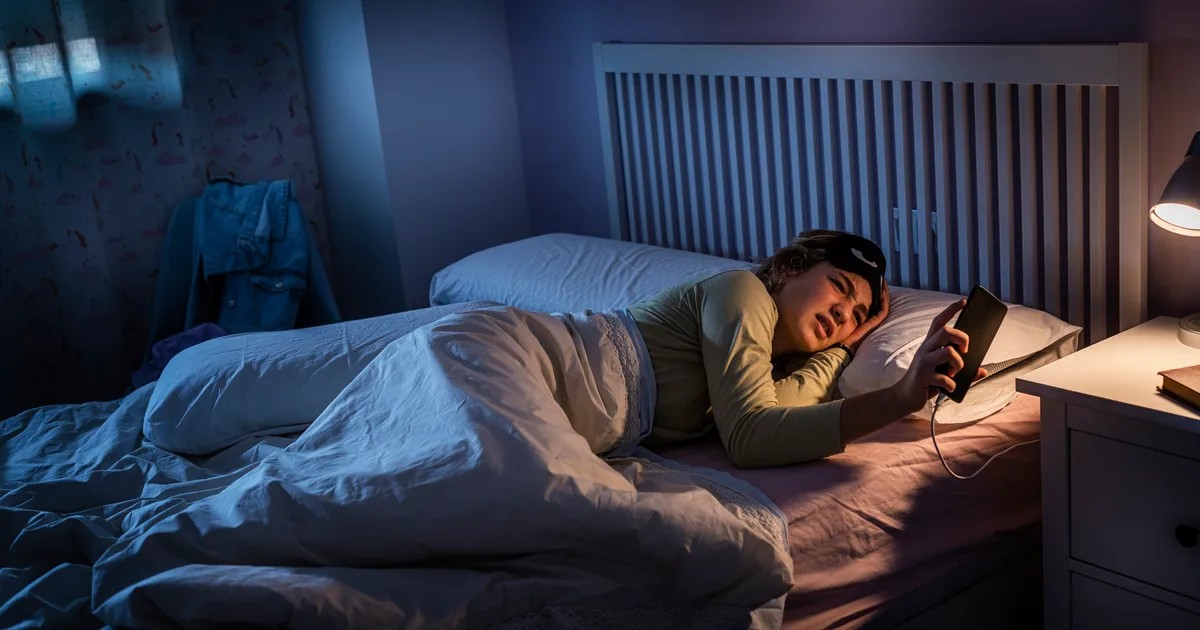
Waking up at 3 a.m. is special.
Not the good kind.
It’s that specific variety of hell where your body wants to rest but your brain decides to review every embarrassing thing you did in 2009. You toss. You turn. You hate yourself for having a pulse.
We’ve all tried everything. Meditation. Calm audio apps. That one podcast episode you’ve heard five times.
It doesn’t stick.
Because what puts you back out differs wildly from person to person. Trial and error is the only path forward. But we skipped the boring parts.
Five people shared their actual survival tactics for falling back asleep. A psychologist broke down why the tricks work.
No fluff. Just the method.
The Breathing Box
Meg S., 42. Overactive mind. Chronic over-thinker.
She counts to six.
In. Six counts. Out. Six counts.
She swears it never fails her. Well. Mostly. She admits she sometimes gets distracted by her own thoughts and forgets to breathe, but when she remembers, the lights go out fast.
Jaime Tartar from Nova Southeastern University confirms it isn’t magic. It’s physiology.
Breathing slows the shift. You move from fight-or-flight. Adrenaline drops. Blood pressure drops. The body stops panicking. It’s a biological override button. Push it.
Deep breathing lowers heart rate and calms the mind. Simple physics.
Dull Is Delicious
Esha M. couldn’t sleep.
Not before her baby arrived.
Once the newborn came, sleep fragmentation hit hard. Waking up? Common. Falling back asleep? Impossible. Her husband had a plan.
He wrote boring stories.
Not thriller fiction. Not memoirs with plot twists. Dull narratives. Low stakes. High repetition.
Esha read a few pages. Boredom took over. She drifted off.
Her husband now sells the stories on Amazon. People pay money to be bored to death. Who are we to judge?
Tartar agrees. The brain hates uncertainty but also hates total emptiness. Boredom gives it something to do that requires zero energy. It reduces rumination. Pick classics. Nature essays. Avoid suspense. If you wonder “what happens next,” you’ve already lost.
The Predictable Screen
Liz S., 51. Anxious thoughts keep her awake.
She grabs her phone.
But not TikTok. Not the news.
Reruns. Columbo. Murder, She Wrote. Midsomer Murders.
She watches them on her phone. Earbuds in. Volume low.
She knows the plots. She knows the endings. The lack of surprise is the point. Columbo has classical music. No car chases. No screaming.
Five minutes. Usually asleep.
Tartar likes the predictability. It creates a soothing loop. No emotional spikes.
Warning. The screen is bad for your circadian rhythm. Blue light tricks your brain into thinking it’s noon.
Fix it. Use a blue-light filter. Go amber. Make the screen dull. Pick shows with zero drama. Cliffhangers are the enemy of sleep.
The Frequency Hack
Paul G., 46. Traumatic brain injury messed up his sleep cycle.
He found solace in tones.
Specifically. Solfeggio frequencies.
He listens to YouTube videos that run for hours. Four to eleven hours straight.
963 Hertz. 999 Hertz. Sometimes mixed with 432 or 528 Hertz.
He lies on his back. Breathes for four counts. Holds. Exhales.
Five to ten minutes. Lights out.
Science is still catching up. Tartar admits more research is needed.
Early studies suggest these frequencies might tweak mood. Or brainwave activity. Or the autonomic nervous system. Maybe all three.
Does it work? For Paul, yes. It promotes physical and mental quiet. Give it a spin. It can’t hurt more than counting sheep.
Stop Trying
Caroline B. lives in New York. She is a social worker.
She deals with sleep anxiety. That weird fear where you panic because you aren’t sleeping.
The solution? Give up.
Not really. Just lower the stakes.
She reminds herself. Being relaxed is fine. Even if eyes are open. Stress kills sleep faster than noise does.
Paradoxically? Trying to sleep makes insomnia worse.
Worrying raises arousal. Arousal prevents sleep. It’s a spiral.
Break it.
Tell yourself you are resting. Even if you are awake. Lying there doing nothing is rest. It counts.
The pressure evaporates. Anxiety drops. Sleep often follows.
Rest is good for me. Even if I don’t sleep.
Don’t watch the clock.
Let yourself lounge. Take the weight off.
You’ll probably get there anyway.
Or you’ll just feel slightly more tired in the morning. That happens too.
Accept it.