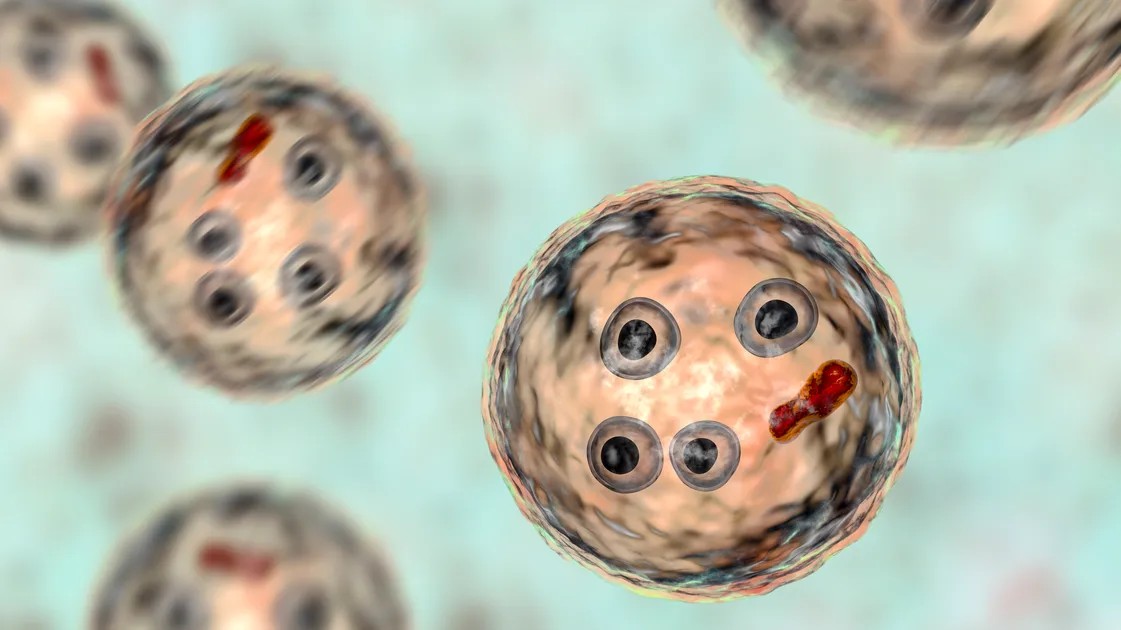
Summer means beach trips. Barbecues. And—unfortunately—a microscopic parasite causing explosive diarrhea.
Cyclospora cayetanensis is spreading.
It is a nationally notifiable disease. Healthcare providers must report cases. The CDC tracks them. They want to stop the spread.
As of June 145 people have gotten sick. Seventeen states. Ages 5 to 86. Mostly women. Sixty-one percent. Twenty hospitalized. No deaths. These people did not travel abroad in the two weeks before getting ill. They ate food right here in the US.
The real number is probably higher.
Dr. Bobbi Pritt knows this. She chairs the Division of Clinical Microiology at the Mayo Clinic. The official count is just the tip.
“It never really completely reflects all the cases,” Pritt said. “because of all those things that go into the game.”
People get mild symptoms. They wait it out. No doctor visit. No test. Others go to the doctor but get the wrong test. Cyclospora needs a special stain. A regular stool test won’t find it. If it’s not ordered it doesn’t exist on the charts.
We see this with every reportable disease.
The CDC numbers are just the tip.
New York leads the pack. Between 31 and 8o cases. Texas and Illinois have plenty too. Alaska, Florida, Ohio, Pennsylvania—scattered cases everywhere.
Why now?
Warmth. Cyclospora loves the tropics. It thrives there. Here its season is May through August. This year started on May 13.
“This is a season where we get more fresh produce coming in,” Pritt noted. “People are eating salads and herbs and berries.”
Raw food is the issue. Cooking kills the parasite. Salads? No help. If the plant is infected the parasite stays alive.
Is it person-to-person?
No.
Don’t panic if a roommate is sick. It doesn’t spread like norovirus. No shedding virus here. You won’t catch it by hugging an infected person. You catch it by eating what they ate. Contaminated food. That’s the vector.
Imports are usually the culprit. Basil, cilantro, raspberries, snow peas. All suspects before.
The parasite comes from human stool. That is the bad part. It enters soil where export produce is grown. It rides the fruit into US supply chains. Poor hygiene in the source country means human waste gets into your berries. It’s a human disease. Not an animal one.
Symptoms start within a week.
Forget the 24-hour bug. Cyclospora sticks around. Prolonged watery diarrhea. Abdominal cramps. Bloating. Nausea. Fatigue. Loss of appetite.
Antibiotics aren’t strictly mandatory but they help. Without treatment symptoms can linger over a month. Fatigue is particularly stubborn. It stays long after the stomach settles.
What do you do?
Wash your hands. Soap and water. Before and after touching produce. Wash the produce under running water. Even if it says “pre-washed”. Use a brush for melons or cucumbers. Scrub it.
Chemicals won’t fully kill Cyclospora. Disinfectants are unreliable against it.
Most produce is safe. Pritt says so. Eating salad is part of a healthy life. Don’t stop eating fruits and vegetables. Just know what’s going on.
If you have prolonged diarrhea you go to the provider. Ask for the stain. Maybe the answer is sitting in the lab already waiting for you to look for it.
Who knows what other bugs are hiding in the raw kale?