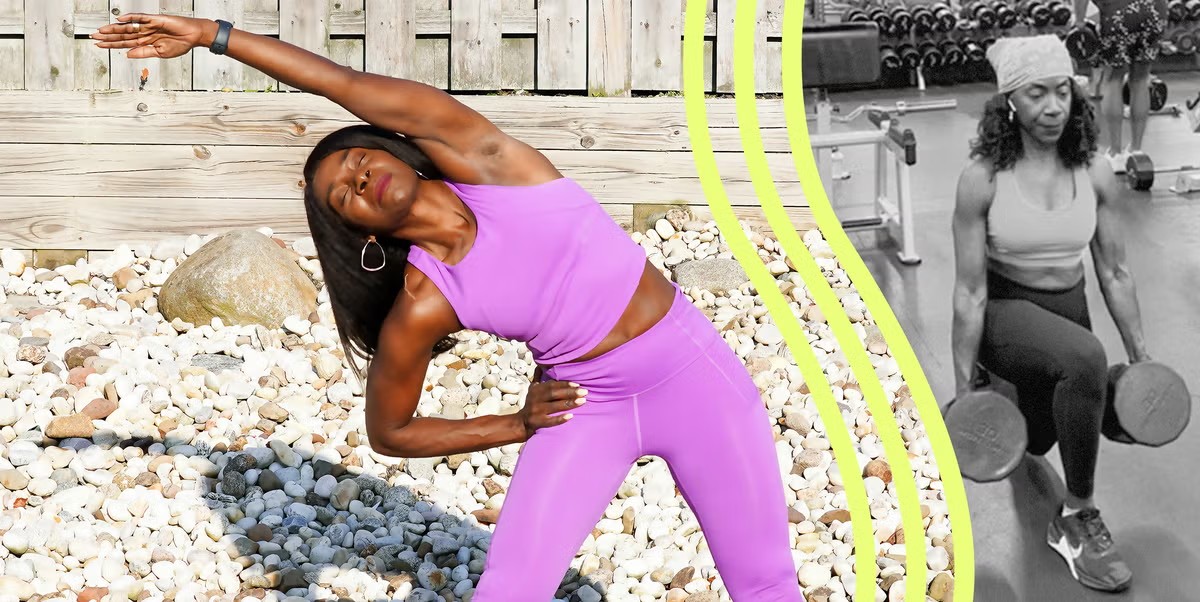
Patricia Greaves didn’t wake up one day deciding to become a pro bodybuilder. She woke up realizing she needed to.
It happened in her late 30s. The years since her third pregnancy at age 36 left her feeling disconnected from her body. She thought the exhaustion was just the toll of motherhood. It wasn’t.
It was early perimenopause hitting hard.
The symptoms were violent and confusing. Panic attacks. Heart palpitations so severe she called the ambulance twice, convinced she was dying of a heart attack. Terrible hot flashes. Intense anxiety that didn’t make sense at the time. On top of it all, her father was becoming critically ill, and she was his caregiver.
She felt like she was falling apart.
So, she went to the gym. Not to “tone up” or lose baby weight. She went to find her footing. The weights didn’t just build muscle. They built a refuge. They gave her a place to ground herself when the world felt too loud and too heavy.
That shift changed everything. It led to a pro card in 2018 and a new career helping women over 40 reclaim their strength. Here is the exact routine and mindset that saved her life.
The Origin Story: From Coke-Bottle Glasses to Pro Stage
Greaves, a certified personal trainer and founder of StrongHer Personal Training, has always loved lifting. Back in high school, a cousin dragged her into a circuit class. She was hooked. While other students studied or socialized, she was at the gym, weight-training with guys who didn’t care about her gender, only her effort.
Life got busy. Marriage. Kids. The routine became less regimented, but she still showed up two or three times a week for over a decade.
Then came the perimenopause crash.
The anxiety was the hardest part. She had to relearn what her body was telling her. The gym became her therapy. The consistency started as a physical goal but evolved into mental survival.
In 2010, a local trainer asked her if she wanted to compete. She was skeptical. Women half her age were on the stage. She said yes.
She placed third.
That experience unlocked something. She competed seven more times. She earned her pro card in 2018 by defying the idea that women over 40 shouldn’t chase heavy loads. She turned pro in 2019. Her husband helped with posing drills. Her three daughters cheered. She went from the nerdy kid in thick glasses to a woman in a bikini, flexing muscle on a pro stage.
She plans to do it again at 60.
“I felt I had accomplished what I set out by earning my pro card. So I became a personal trainer.”
Why Strength Training Is Non-Negotiable Over 50
Most women get stuck. They lift the same pink dumbbells for months. Then years. They wonder why the mirror doesn’t change.
The problem is a lack of progression.
Muscles don’t grow without challenge. If you want to build muscle and stay fit during perimenopause, you have to treat resistance as a variable, not a constant.
Greaves’ advice is blunt: Invest in three pairs of dumbbells. Or buy a solid set of adjustable ones to save space. You need a light, medium, and heavy option.
- Light: Challenging by rep 10.
- Medium: Challenging by rep 8.
- Heavy: Challenging by reps 4 to 6.
This range matters. As you get stronger, you need more resistance to keep stimulating growth. If you’re strength training regularly but seeing no results, you’re likely under-loading.
Start with a warm-up set of 10 reps with light weight. Then, add load. Drop the reps. This is progressive overload. Keep increasing weight until your form starts to slip. That’s your limit. Note it. Next time, you try to beat it by five to ten pounds.
Lower body moves usually allow for heavier weights because the muscle groups are larger. Upper body requires more finesse. Both matter. Both build the resilience perimenopause tries to erode.
The Weekly Split: A Realistic Routine for Busy Lives
Greaves trains three to four times a week. It’s not extreme. It’s sustainable. It fits around life, teaching, and raising a family.
She splits her focus: Lower body days. Upper body/core days. Pilates once a week. Running on her own.
Here is how she structures a typical week.
Monday: Lower Body
Focus on the big movers. Squats. Lunges. Deadlifts. These recruit the most muscle mass, burning more calories and driving systemic hormonal responses. She aims for 3-5 exercises. Four sets each. Progressive overload in play.
Tuesday: Rest
Active recovery. Walking. Stretching. Do nothing strenuous. The body builds muscle when it rests, not when it trains.
Wednesday: Upper Body
Shoulders. Back. Chest. Arms. Smaller muscle groups. Focus on form. Control. If you swing the weight, you’re using momentum, not strength.
Thursday: Pilates Class
One evening a week. This targets the core and stability. It complements heavy lifting by improving posture and balance. Perimenopause can weaken bone density; Pilates helps mitigate that risk while improving flexibility.
Friday: Rest
Another full day off. Or light movement. Listen to your body. If you’re exhausted, rest.
Saturday: Lower Body (Second Session)
A second lower-body session. Volume increases. Fatigue accumulates. This is where endurance meets strength.
Sunday: 5k Run
Cardio. Steady state. It helps with heart health, mood, and cardiovascular endurance without the impact stress of sprinting.
Beyond the Weights: Mindset and Mastery
Training is the hardware. Mindset is the software.
Greaves is also a teacher of over 27 years. She sees the same patterns in her middle school students that she sees in her gym clients: fear of failure. Fear of looking foolish. Fear of lifting too heavy.
“We can do hard things,” is her mantra.
It’s not just a slogan. It’s a physiological fact. When you lift heavy, you teach your brain that you can handle stress. That skill translates to boardrooms, homes, and hospitals.
Perimenopause can make you feel out of control. Your hormones fluctuate. Your energy dips. Your emotions spike. Strength training gives you a variable you can control. You put in the work. You see the output. It’s honest.
Greaves didn’t just change her body. She changed her trajectory. She stopped shrinking. She started expanding.
If you’re over 40, or 50, or 60, and you think it’s too late to build muscle, you’re wrong. The window hasn’t closed. It’s just waiting for you to walk through it.
Start light. Progress slowly. Trust the process. And if you’re having a panic attack, go lift something heavy. You might find that the weight you’re carrying in your chest isn’t as heavy as the bar on your shoulders.
See you at the gym.